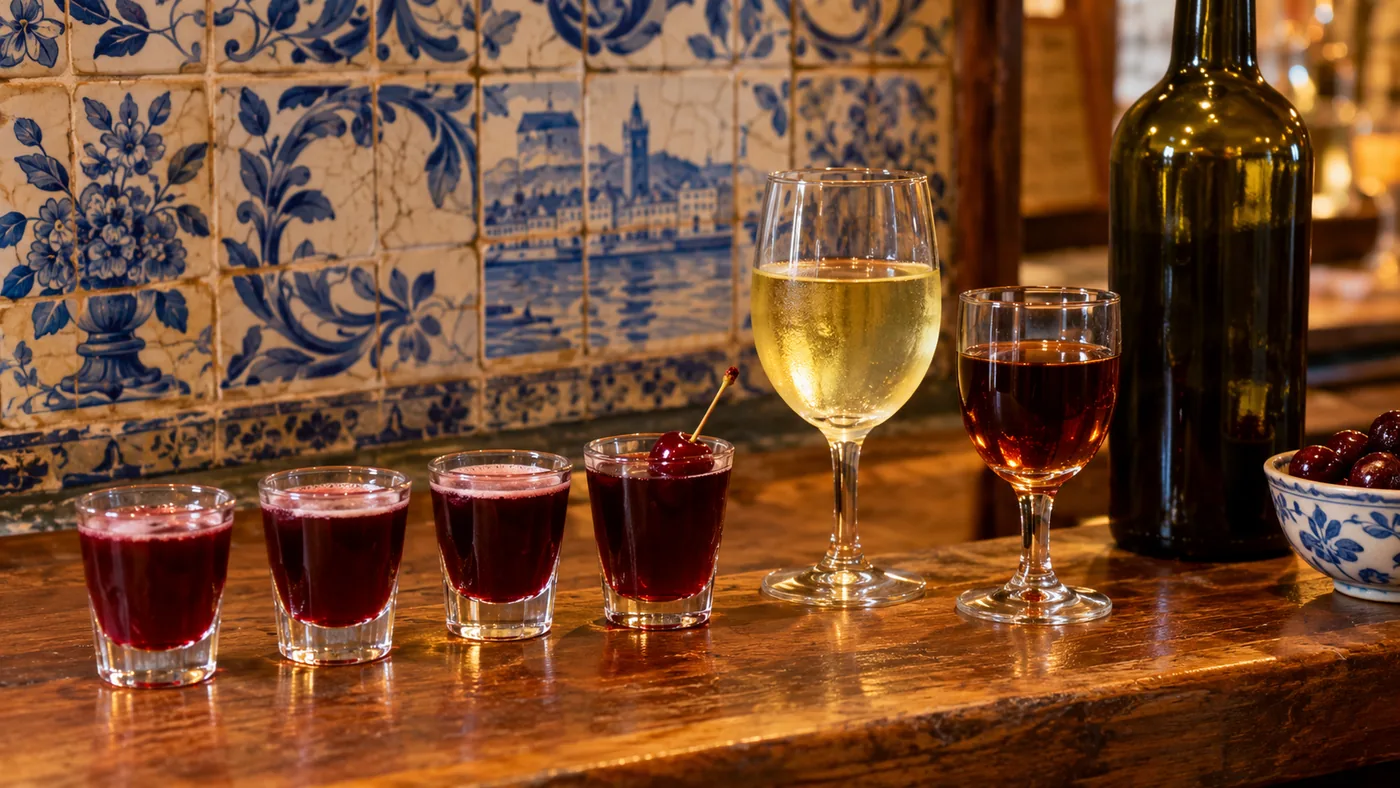
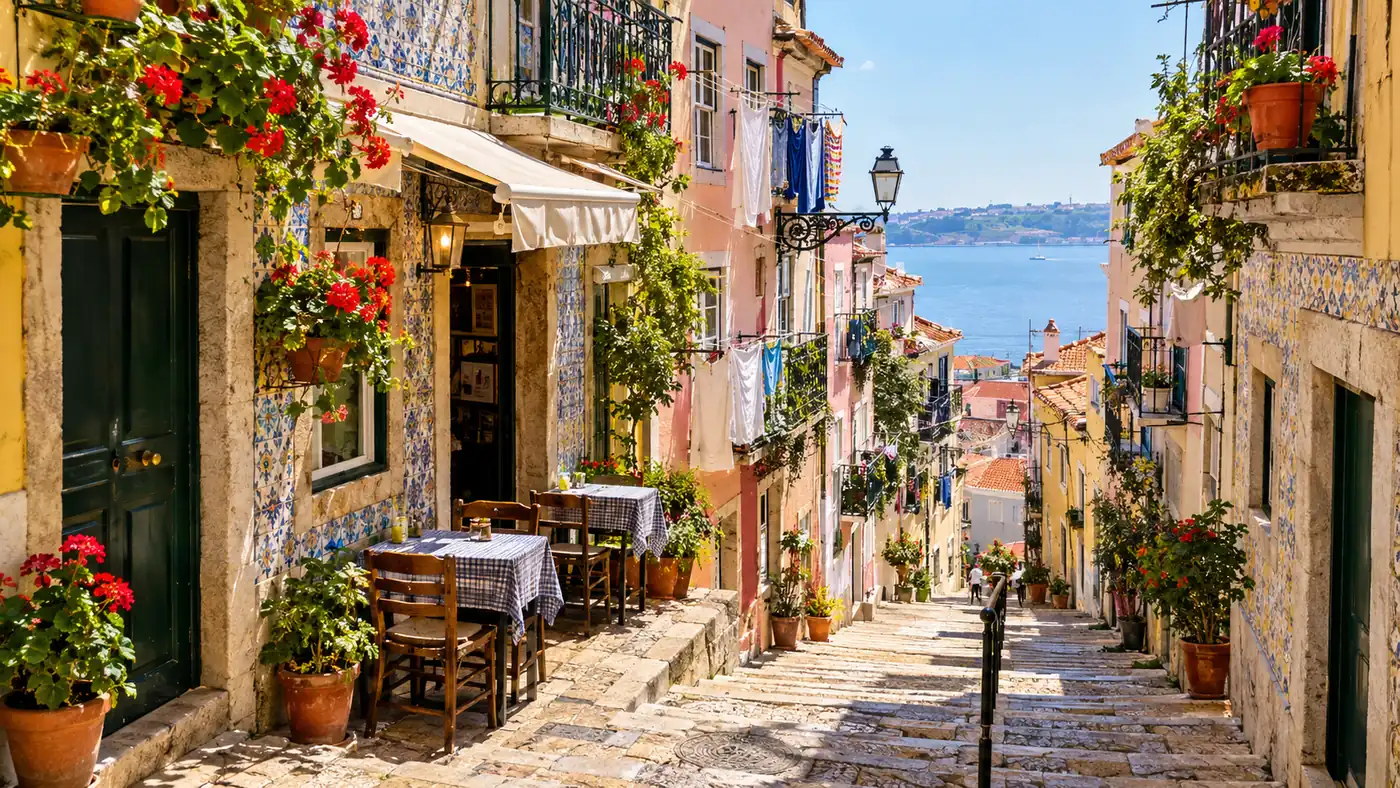
Booking choice: The Baixa food walk with petiscos and drinks, ★ 4.9 (2,193). Check dates Compare the options below
Lisbon is built on hills, and the old centre sits in the one flat valley between them. Where a food walk goes decides how much climbing you do, what kind of food you eat and what the evening feels like.
This guide describes each neighbourhood in a line, which walks go where, the state of the lifts and what to wear. What you will eat is in petiscos or tapas, and every walk side by side is in Lisbon food tours compared.
The quick answer
Flattest: the Baixa (Rossio, Praça da Figueira, Rua Augusta, Praça do Comércio) and the riverfront to Cais do Sodré. Hilly: Chiado, Bairro Alto, Príncipe Real, Alfama, Mouraria and Graça. Lifts: the Glória, Bica and Lavra funiculars and the Santa Justa Lift closed since September 2025; the Graça funicular reopened on 30 April 2026. Flat walks: the Baixa food walk and the full-meal walk. Hill walk: the Bairro Alto evening walk from Príncipe Real. Old quarters: the Baixa and Mouraria walk, and the seated fado evening by Alfama. Shoes: wear shoes with grip; the limestone pavement is slippery after rain. Cancellation: full refund if you cancel up to 24 hours ahead on every tour listed here.
Which neighbourhood is best for a food tour in Lisbon, Alfama or Baixa?
The Baixa, for most people: it is flat, central and full of taverns and counters a few minutes apart. Alfama has more atmosphere but is steep, and suits a fado evening better than a three-hour tasting walk.
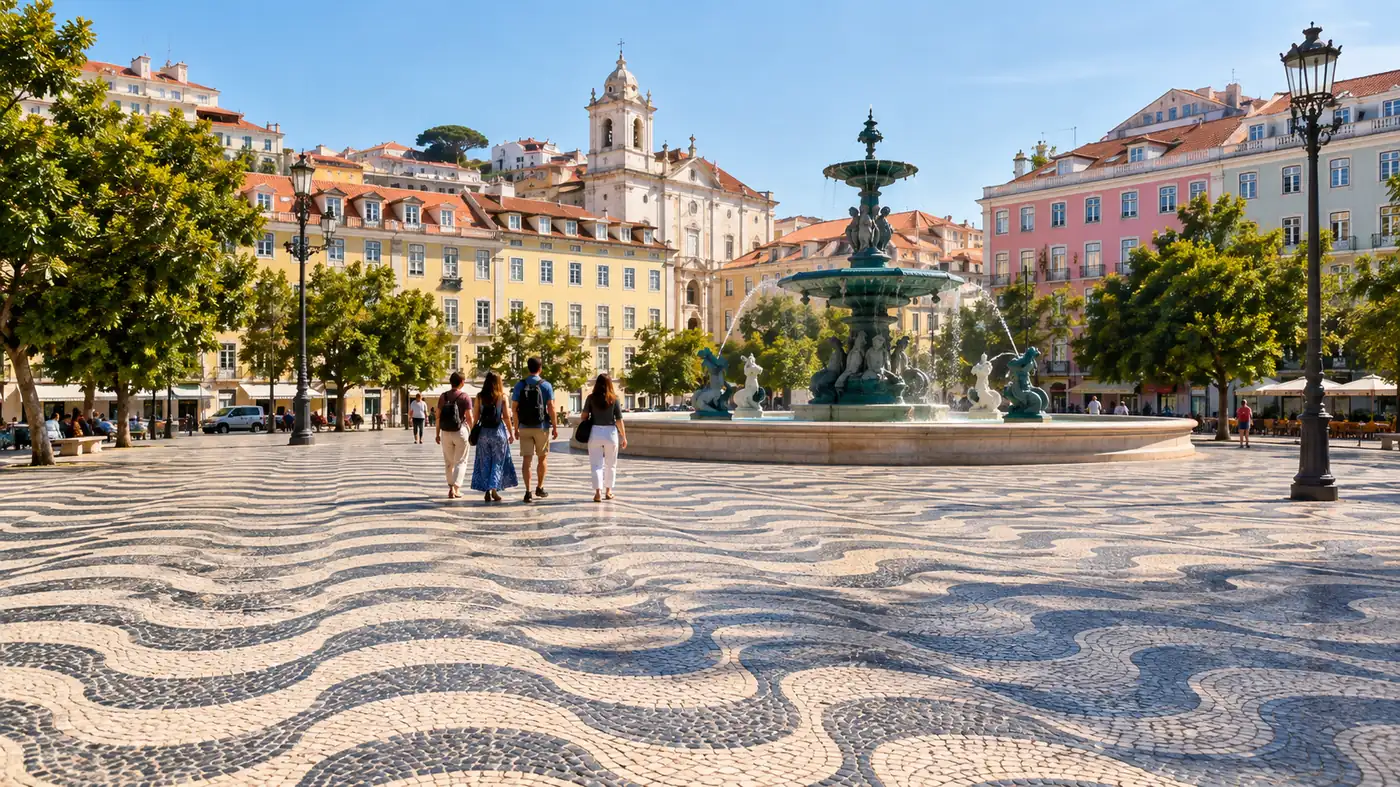
The Baixa Pombalina was rebuilt in a regular grid under the Marquis of Pombal after the 1755 earthquake. Its straight streets run from Rossio and Praça da Figueira down to Praça do Comércio on the river, which makes it the easiest part of Lisbon to walk. The Baixa food walk starts near the Tagus and passes Igreja de São Domingos and the grand squares, with the story of the rebuilt city along the way.
Alfama is Lisbon's oldest quarter, a maze of stairs and alleys below the castle. It is lovely to explore, but every stop means more steps. Many visitors combine the two: a food walk in the Baixa, and a slow afternoon or a fado night in Alfama.
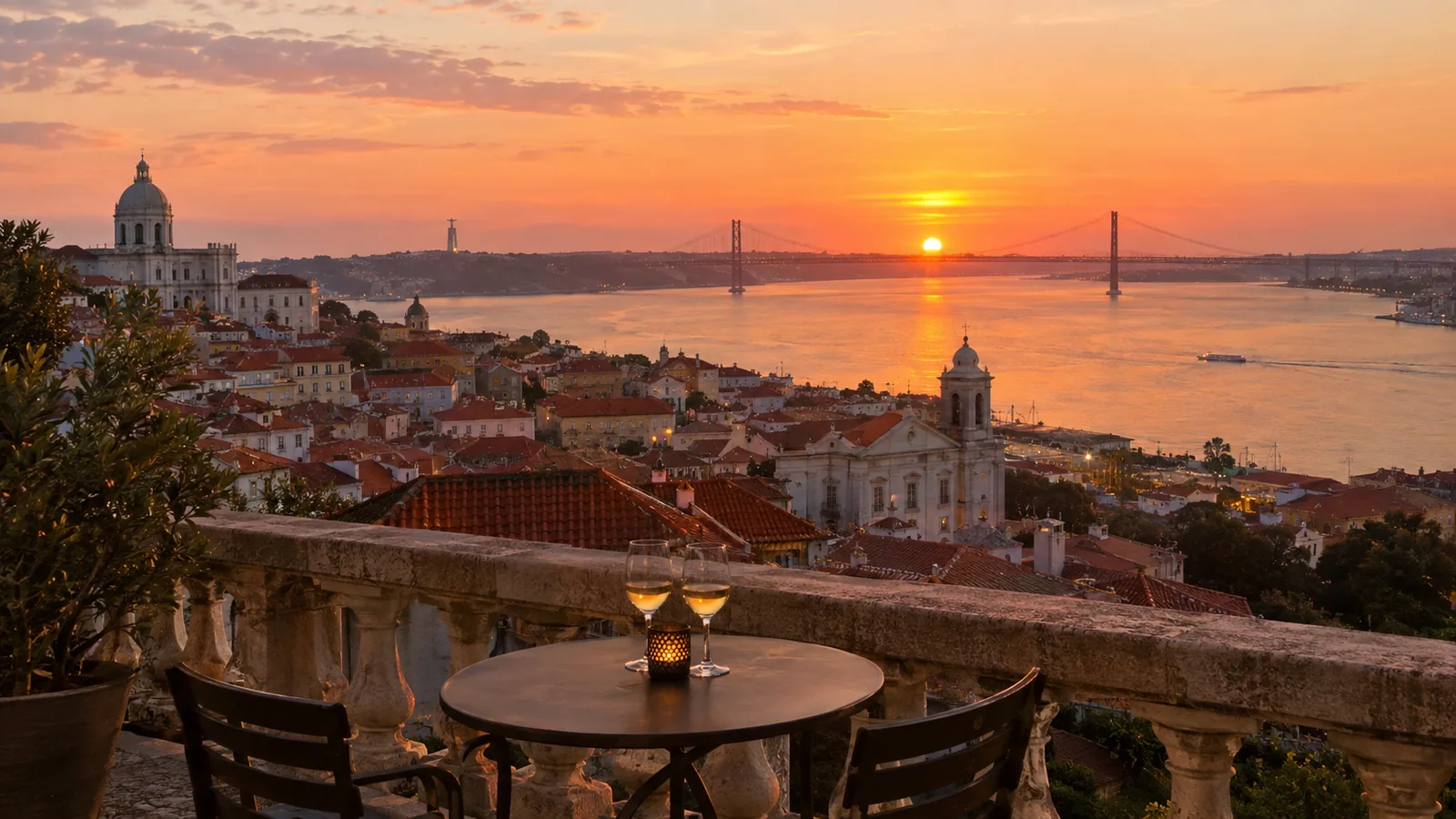
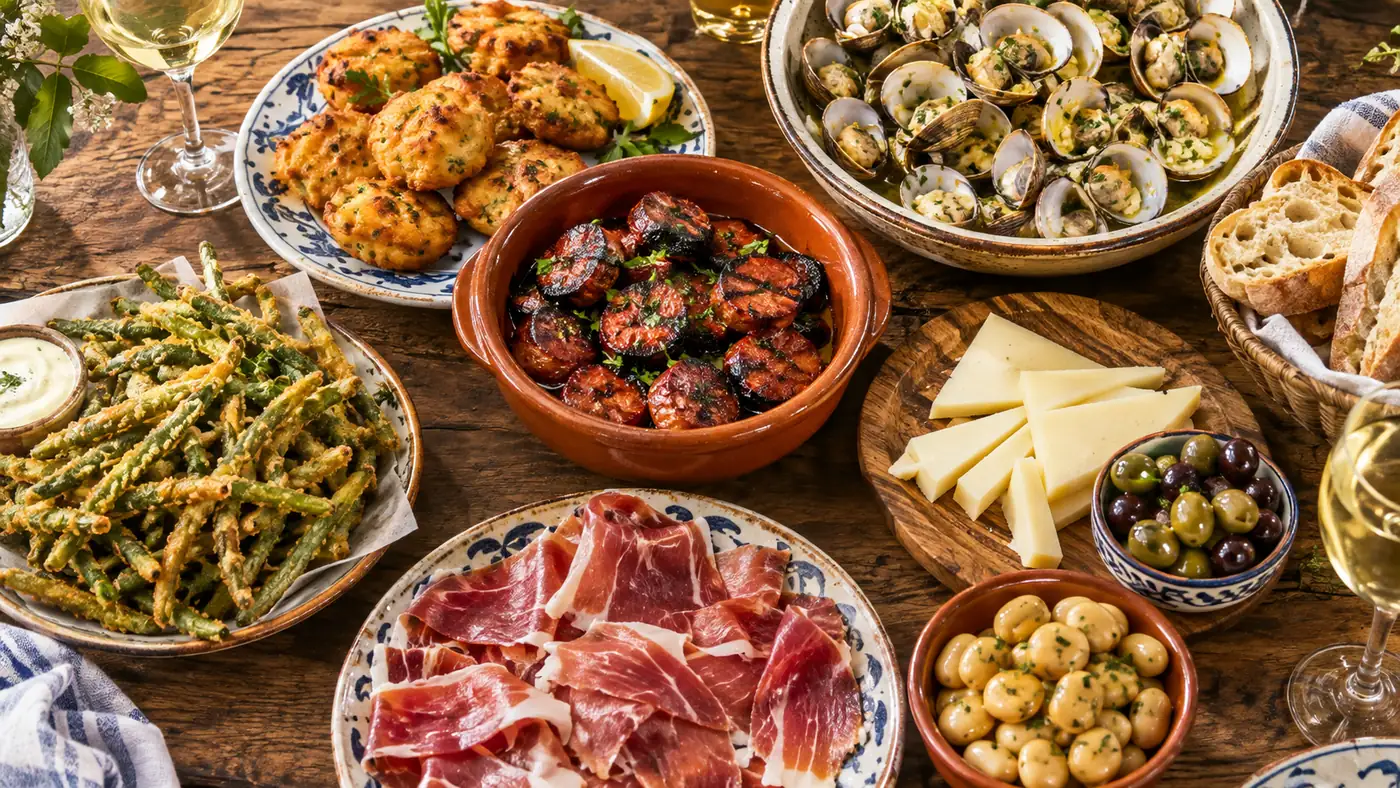
A flat, accessible route through the Baixa with 8 tastings and 4 drinks, from tavern petiscos to ginjinha and dessert.
Check dates for the Baixa food walk with petiscos and drinksWhat is each Lisbon neighbourhood like for food?
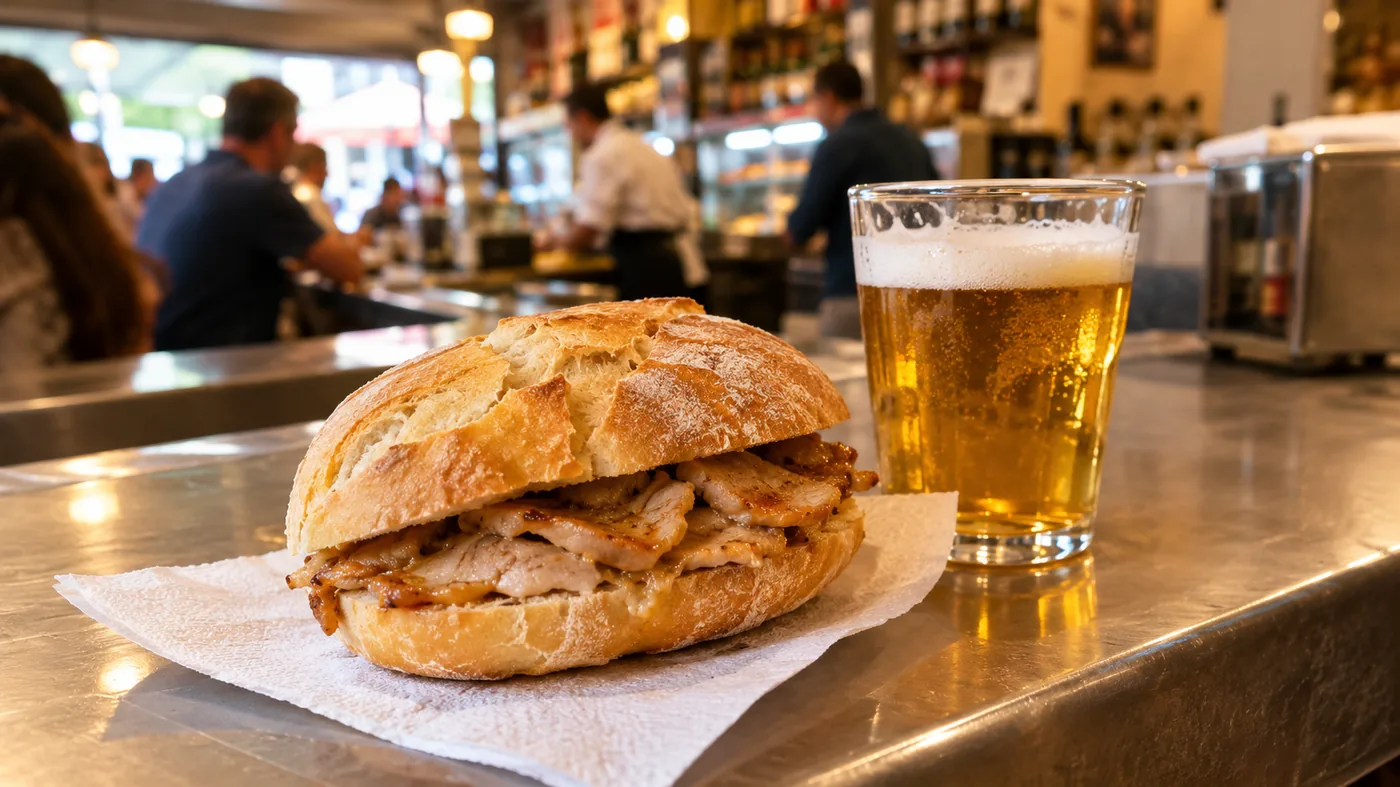
Each area has its own style: taverns and counters in the Baixa, pastries and bifanas in Chiado, petiscos and late bars in Bairro Alto, wine bars in Príncipe Real, fado and tascas in Alfama and Mouraria, and a big food hall in Cais do Sodré.
- Baixa: the flat grid between Rossio and the river, with ginjinha on Largo de São Domingos, bifana counters and old pastry shops.
- Chiado: uphill to the west, around Largo de Camões, with Manteigaria for pastéis de nata and O Trevo for bifanas.
- Bairro Alto: a hilltop grid of taverns and bars that wakes up late.
- Príncipe Real: north of Bairro Alto, with a garden square, concept stores and wine bars.
- Alfama: the oldest and steepest quarter, below the castle, and the heartland of fado.
- Mouraria: next to Alfama, the quarter where fado is said to have been born, with family-owned shops and taverns.
- Cais do Sodré: flat by the river, home to Time Out Market Lisboa inside Mercado da Ribeira, with dozens of counters.
| Area | Terrain | Food style | Walks that go there |
|---|---|---|---|
| Baixa | Flat grid | Taverns, counters, ginjinha, pastry shops | Baixa food walk, morning walk, full-meal walk, two-hour city walk |
| Chiado | Uphill from the Baixa | Pastéis de nata, bifanas, cafés | Vegan walk, which starts on Largo de Camões |
| Bairro Alto | Hilltop, cobbled lanes | Petiscos and late bars | Bairro Alto evening walk |
| Príncipe Real | Hilltop, gentle once you are up | Wine bars and a garden square | Bairro Alto evening walk, at the start |
| Alfama | Steep, with stairs and alleys | Fado houses and tascas | Two-hour city walk; the seated fado evening is nearby |
| Mouraria | Hilly | Family-owned taverns and fado | Baixa and Mouraria food and wine walk |
| Cais do Sodré | Flat riverfront | Time Out Market and bars | Best explored on your own |
Is Lisbon too hilly to walk?
No, but plan for it. The Baixa and the riverfront are flat, and almost everything around them climbs. Take it slowly, use the metro for the long climbs and wear shoes with grip.
Lisbon sits on a series of hills, and Chiado, Bairro Alto, Príncipe Real, Alfama, Mouraria and Graça are all uphill from the Baixa. The streets are paved with calçada portuguesa, the black-and-white limestone mosaic, which is beautiful and polished smooth by centuries of feet. It gets slippery after rain, so trainers or walking shoes with grip are better than smooth soles. The city has announced that it will replace some stretches with a non-slip surface.
The metro helps on the climbs. Baixa-Chiado station, on the Blue and Green lines, connects the lower town with Chiado, and Rossio, Restauradores and Terreiro do Paço serve the Baixa.
Is there a Lisbon food tour without hills?
Yes. The Baixa food walk follows a flat, accessible route, and the full-meal walk is a flat walk in central Baixa. The no-uphill walk is planned to avoid climbs too, but check its route with the operator.
The small-group walk with a full meal stays in central Baixa with up to 10 guests. The no-uphill food walk lasts 3.5 hours with 14 tastings and has only 20 reviews so far. Its listing still mentions the Santa Justa Lift, which has been closed since September 2025, so ask the operator what replaces it.
The vegan food and culture walk starts on Largo de Camões in Chiado and is planned mostly downhill. All the walks, flat and hilly, are side by side in Lisbon food tours compared.
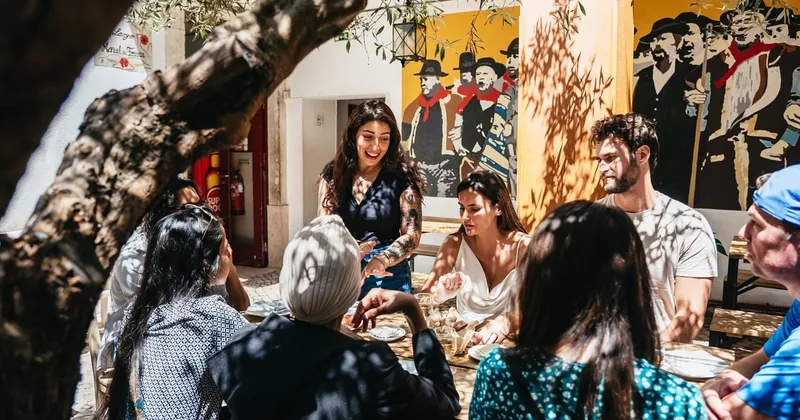
The most booked walk on this site keeps to the flat Baixa: 8 tastings and 4 drinks at taverns, family-run restaurants and street-food counters, with tables booked ahead. Rated 4.9 from 2,193 reviews.
Explore the Baixa food walk with petiscos and drinksIs the Santa Justa Lift open?
No. The Santa Justa Lift and the Glória, Bica and Lavra funiculars have been closed since September 2025, after the Glória funicular accident. The modern Graça funicular reopened on 30 April 2026.
There is no reopening date for the Santa Justa Lift, the Bica or the Lavra. For the Glória funicular, which used to climb from Restauradores towards Bairro Alto, Carris targets a new funicular for the first half of 2029. Older articles and some tour listings still mention the lifts; they are out of date. Check the Carris website for the current service.
For food walks this changes little. The Baixa walks never needed a lift, and walks into Chiado and Bairro Alto now go up on foot. The two-hour city walk lists the Elevador de Santa Justa among its sights, and you see it from the street.
Is Bairro Alto good for food or just bars?
Both. Bairro Alto is Lisbon's nightlife hub, but its old lanes also hold taverns serving petiscos, and the early evening, before the bars fill, is a good time to eat there.
Bairro Alto is a hilltop grid of cobbled lanes, about 500 years old, that wakes up late. In the early evening the taverns put small tables outside; later the crowd moves from plates to glasses. With the Glória funicular closed, the way up from the Baixa is on foot, or by metro to Baixa-Chiado and a shorter climb.
The evening petiscos walk in Bairro Alto starts on Praça do Príncipe Real, stops at a viewpoint at dusk and ends in Bairro Alto's lanes, with 4 stops, 7+ tastes and 5 drinks, including fire-roasted chouriço with bread and cheeses. It is rated 4.9 from only 41 reviews so far, and the route is hilly.
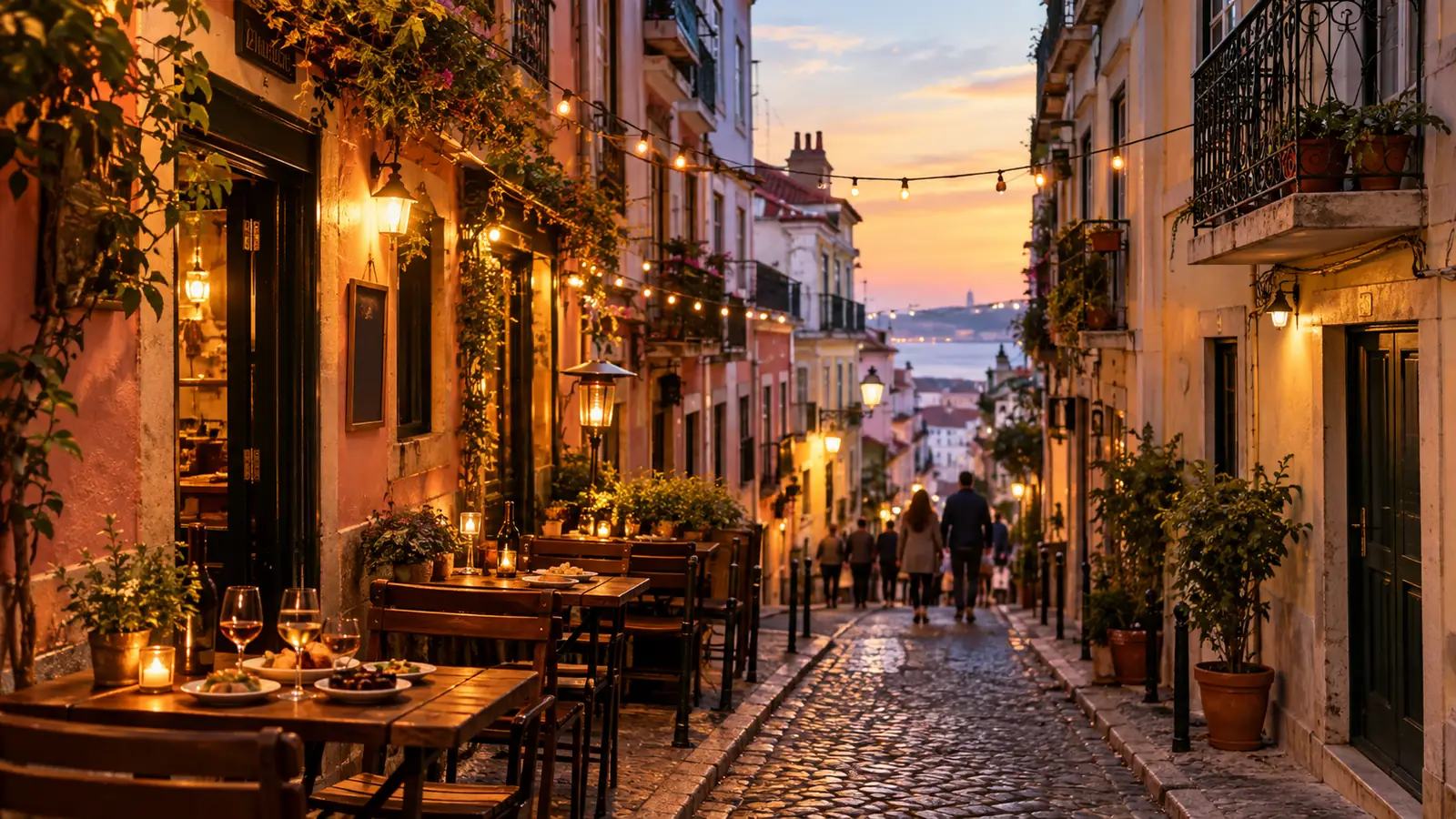
Príncipe Real, a viewpoint at dusk and Bairro Alto's lanes, with 4 stops, 7+ tastes and 5 drinks; expect hills.
Check dates for the evening walk in Bairro AltoWhat is a food evening in Alfama and Mouraria like?
Slower and more musical. These are the quarters of fado, small taverns and steep lanes, so most people come for a seated evening with petiscos and songs rather than a long tasting walk.
Fado has been on UNESCO's list of intangible cultural heritage since 2011. The petiscos and wine evening with live fado is a seated evening, not a walk, at Associação do Fado Casto on Rua de São Mamede, by Alfama: long tables of petiscos and wine, and silence while the fadistas sing. The Baixa and Mouraria food and wine walk goes from the Baixa into Mouraria in 3.5 hours, with family-owned businesses and a stop at a traditional fado house.
The two-hour city walk takes in the Sé and Alfama, with a pastel de nata and ginjinha on the way. In June, the Santo António festivities fill Alfama and Mouraria with street parties and grilled sardines. More on fado with dinner is in where and when to eat in Lisbon.
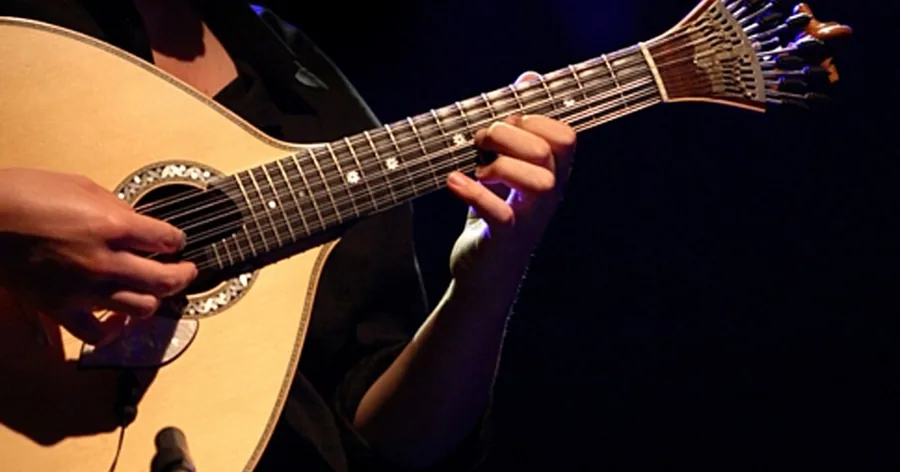
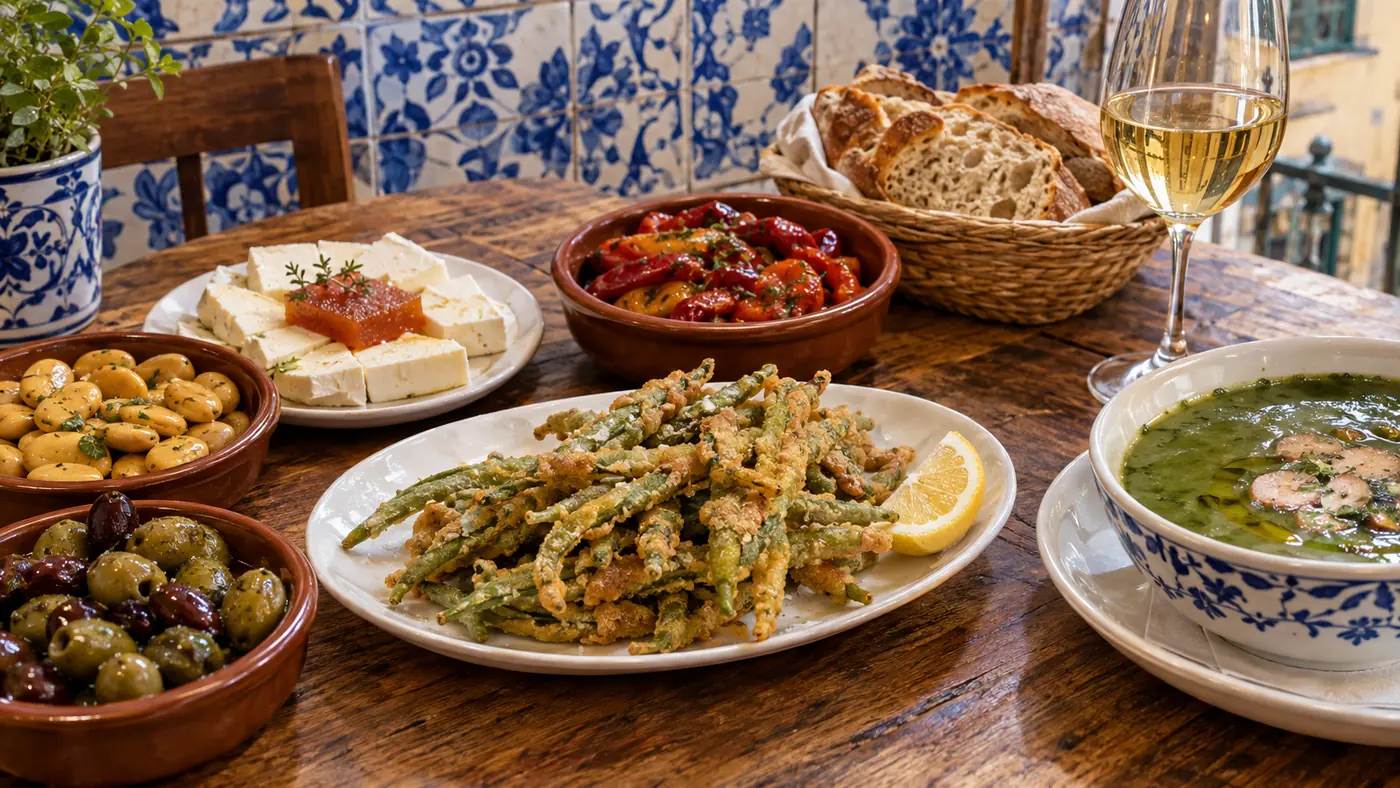
A seated fado night by Alfama: long tables of petiscos and wine in a fado house, with live songs and silence while they sing.
Check dates for the petiscos and fado eveningCan you do a Lisbon food walk with limited mobility?
Yes, on the flat routes. The Baixa walk describes a flat, fully accessible route, while walks in Alfama, Mouraria and Bairro Alto have steps and steep cobbles. Tell the operator your needs when you book.
- Best choice: the Baixa walks, on a flat route with tables booked ahead, so you do not wait on your feet in queues.
- Standing: some stops are counters, so you may stand for a few minutes at a time.
- Hills: Chiado, Bairro Alto, Alfama and Mouraria mean steps and steep streets, and the historic lifts are closed.
- Not suitable: the pastel de nata baking class says it is not suitable for people with mobility impairments.
- Shoes: wear shoes with grip, especially after rain.
- Distance: three hours on your feet adds up, even on flat ground. If that is too much, a seated tasting near Avenida da Liberdade is an easier choice.
Frequently asked questions
Is Alfama good for a food walk?
It is lovely but steep. Most food walks stay in the flat Baixa, and Alfama suits a slower fado evening.
Can I take the Glória funicular to Bairro Alto?
No. It has been closed since September 2025. Walk up, or take the metro to Baixa-Chiado and climb from there.
Which Lisbon food walk is the flattest?
The Baixa food walk, on a flat, accessible route between the river and Rossio. The full-meal walk also stays in central Baixa.
What shoes should I wear in Lisbon?
Shoes with grip. The polished limestone pavement gets slippery after rain.
Ready to book
Choose your walk
Check your date and the live price on GetYourGuide; the refund terms are shown on each option.
Baixa Food Walk with Petiscos and Drinks
- A foodie guide who knows each stop
- 8 tastings: petiscos, seafood, a bifana and dessert
- 4 drinks: vinho verde, local beer and ginjinha
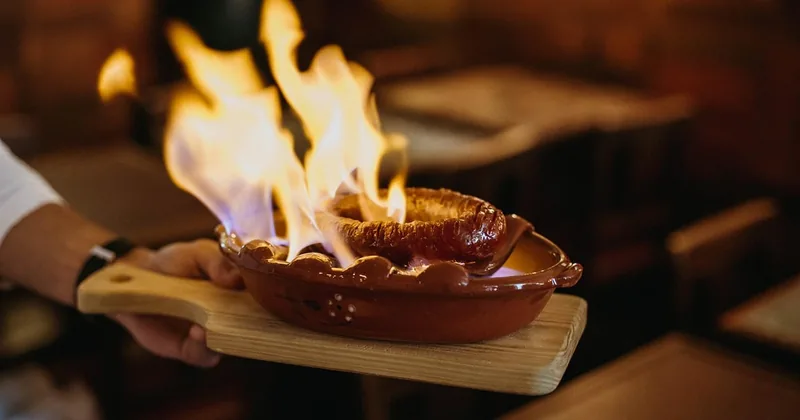
Evening Petiscos Walk in Bairro Alto
Príncipe Real, a miradouro at dusk and Bairro Alto's lanes: 4 stops, 7+ tastes and 5 drinks; only 41 reviews so far

Old Lisbon No-Uphill Food Walk
14 sweet and savoury tastings, regional wines and a pastry with coffee; the listing still names the Santa Justa Lift, closed since 2025